
Completed 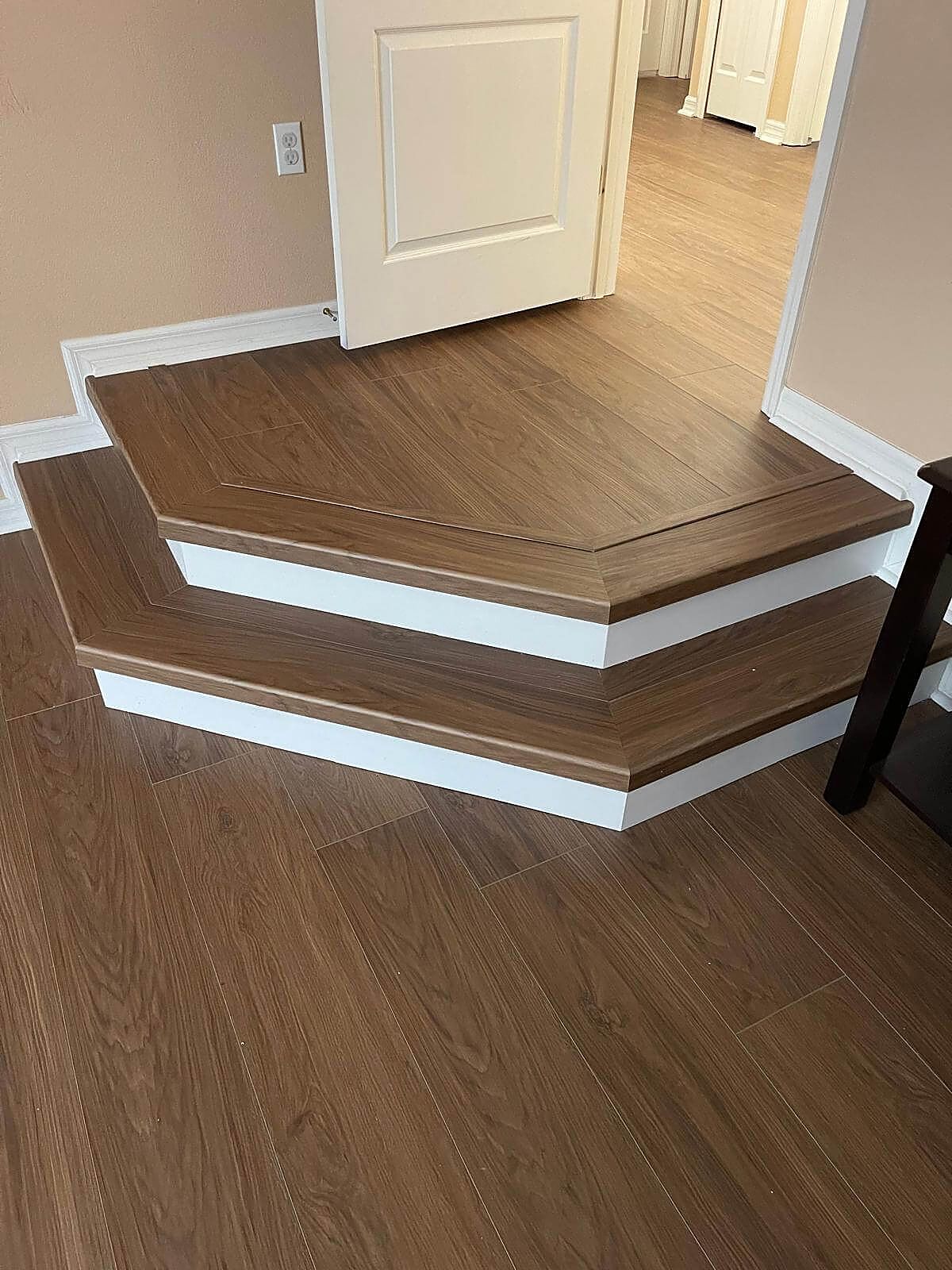
Completed 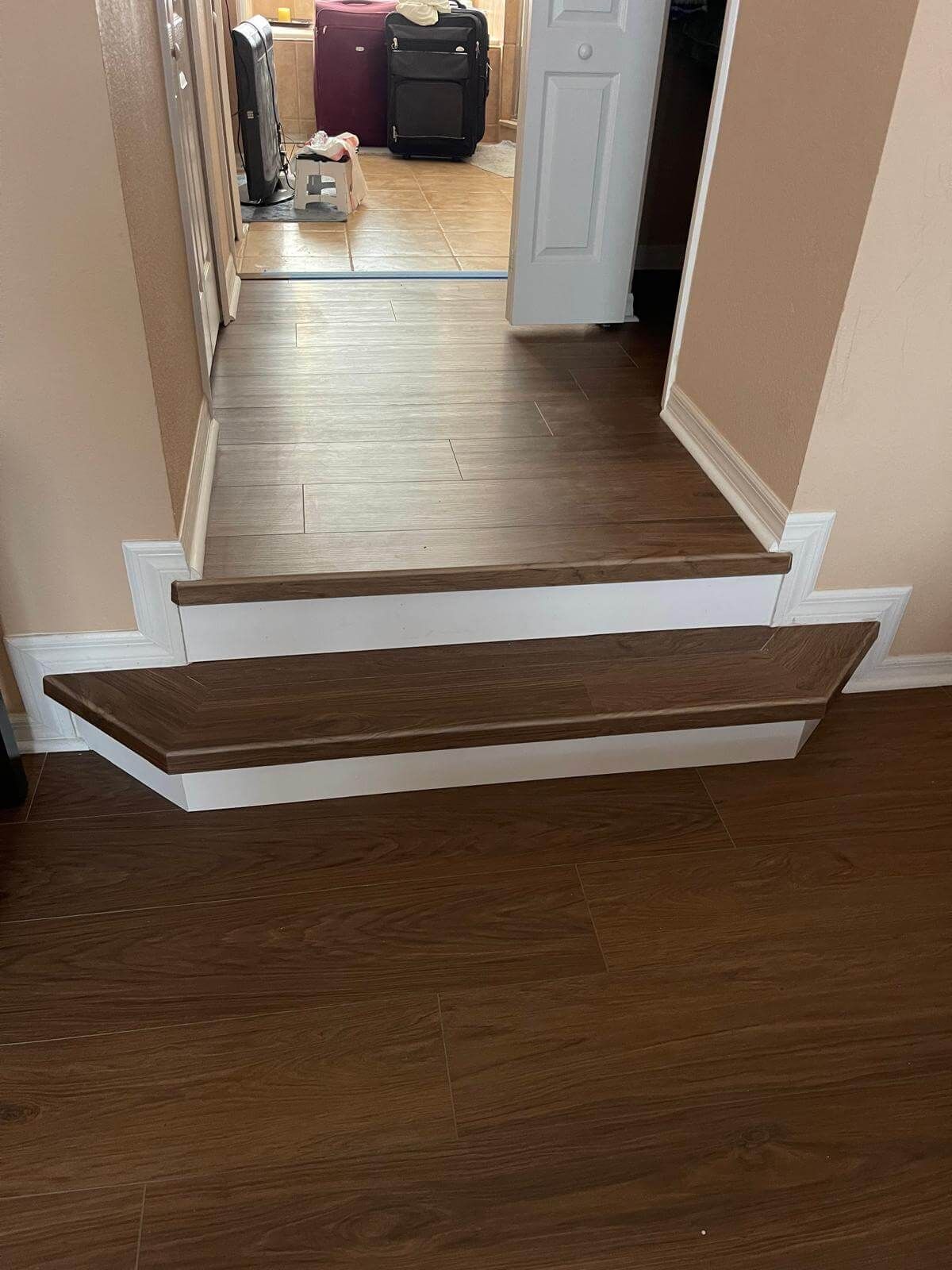
Completed
1 / 3
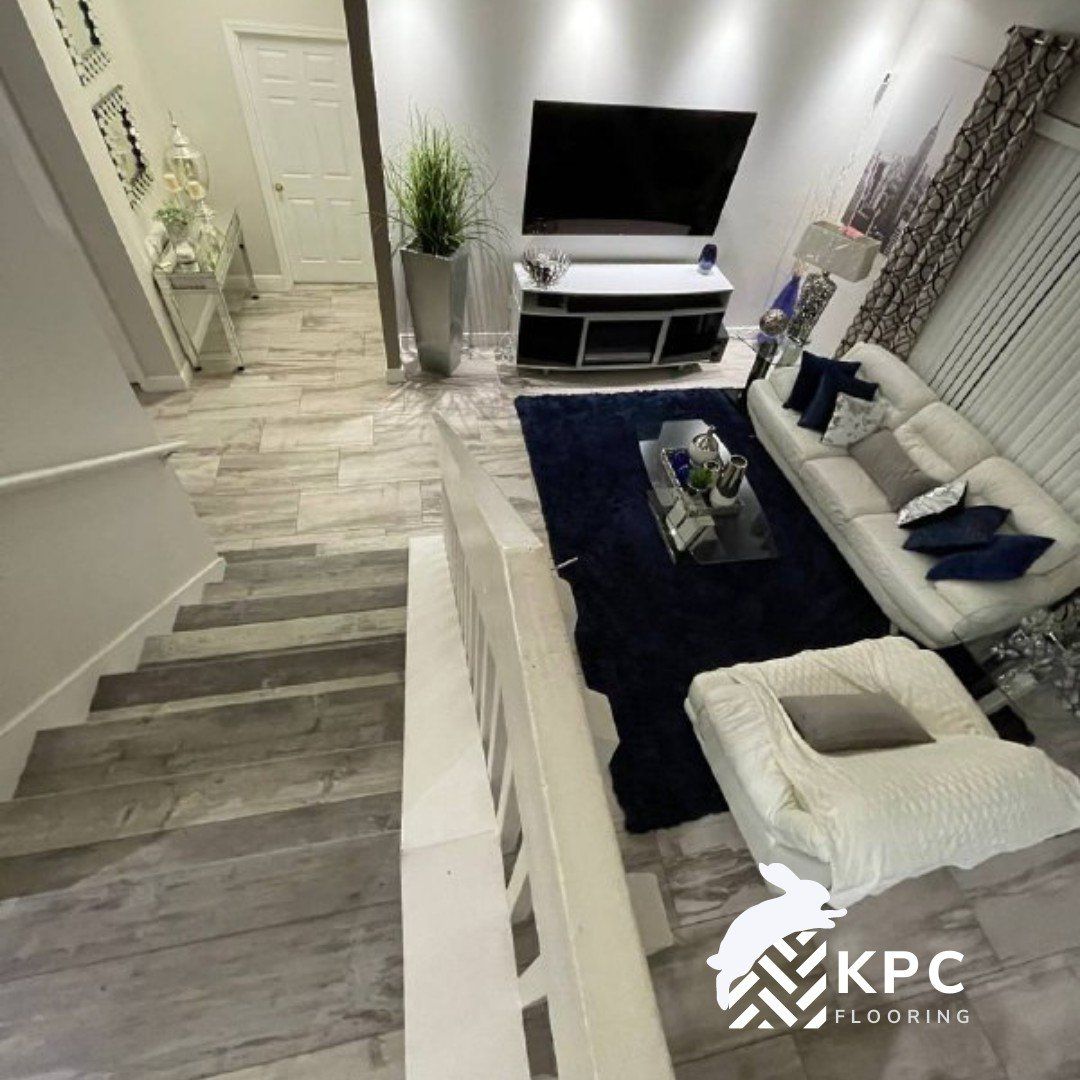
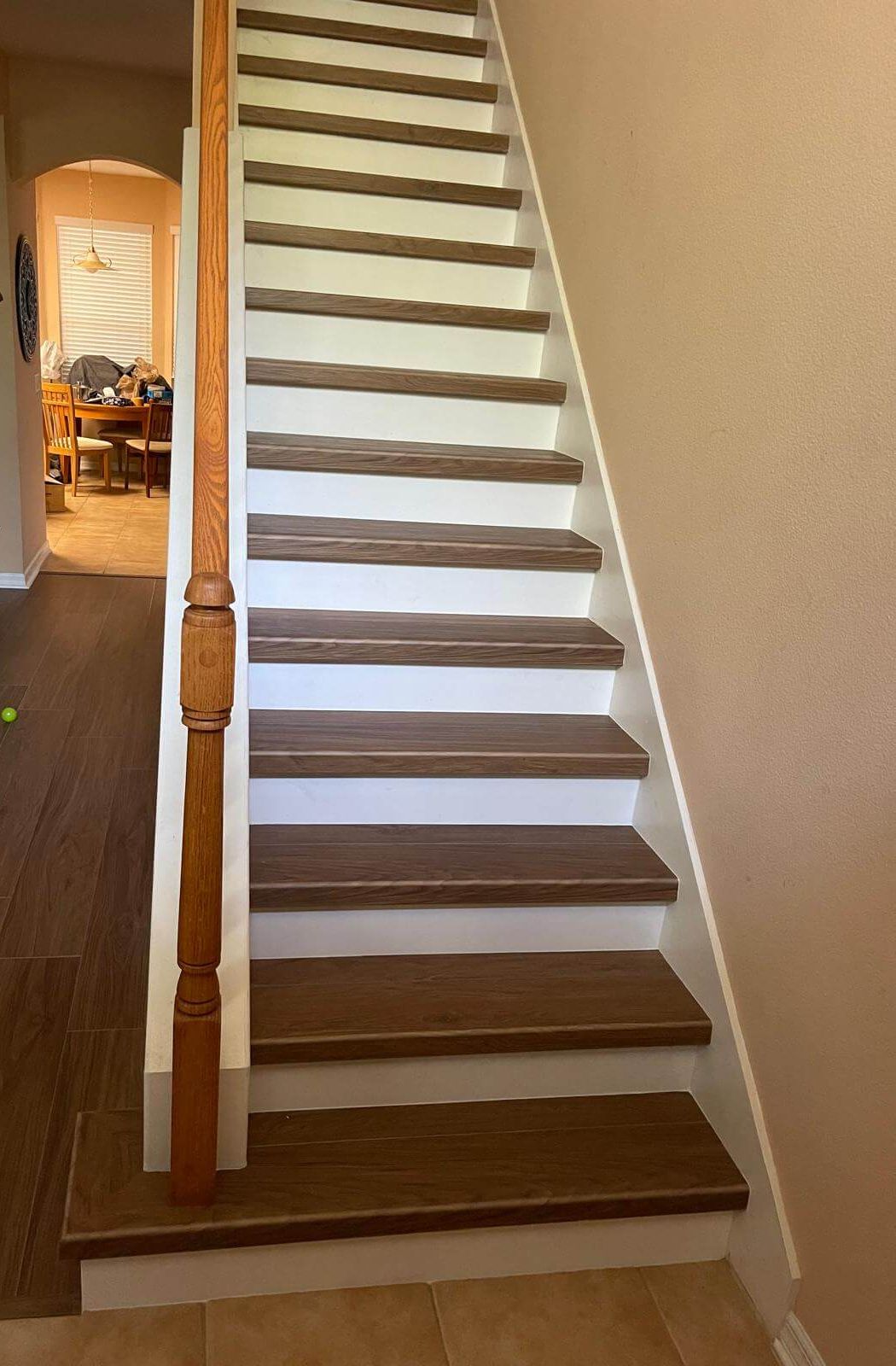
Stair and Landing Vinyl Plank Installation
Serving Apopka and Greater Orlando
3 photos · Completed
Luxury vinyl plank (LVP)
Old floor out, new rigid-core or glue-down planks in.
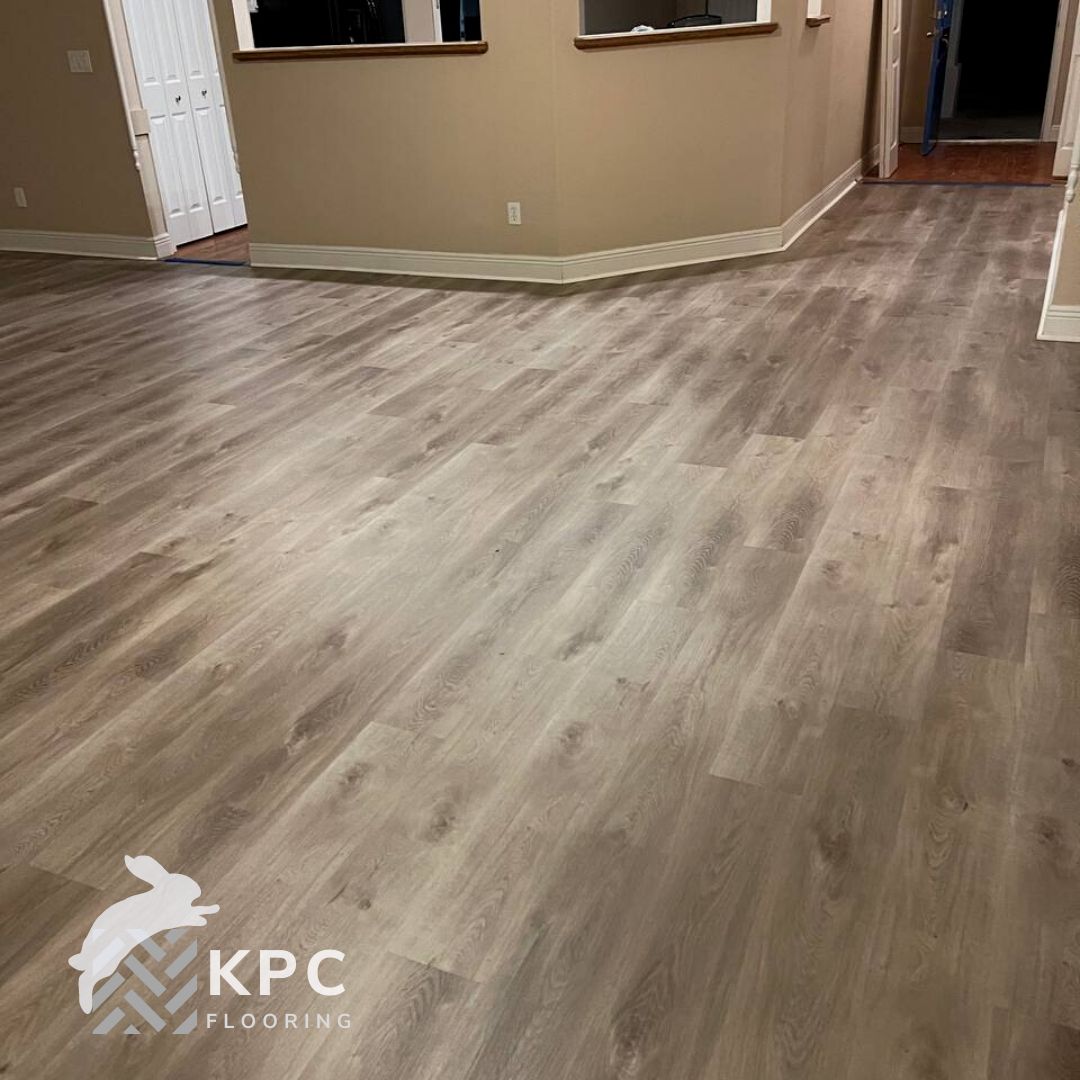
KPC Flooring installs luxury vinyl plank (LVP) in Orlando and nearby cities. We remove the old floor, prep the subfloor, supply the planks and lay them.
A vinyl plank job usually starts with a floor you're tired of: worn bedroom carpet, dated ceramic in the living areas, or an older floating floor that has started to separate. Vinyl plank shrugs off spilled drinks, wet paws and dropped toys, it's comfortable to stand on, and it can go straight onto a concrete slab, the base under most homes in the area, once that slab is flat.
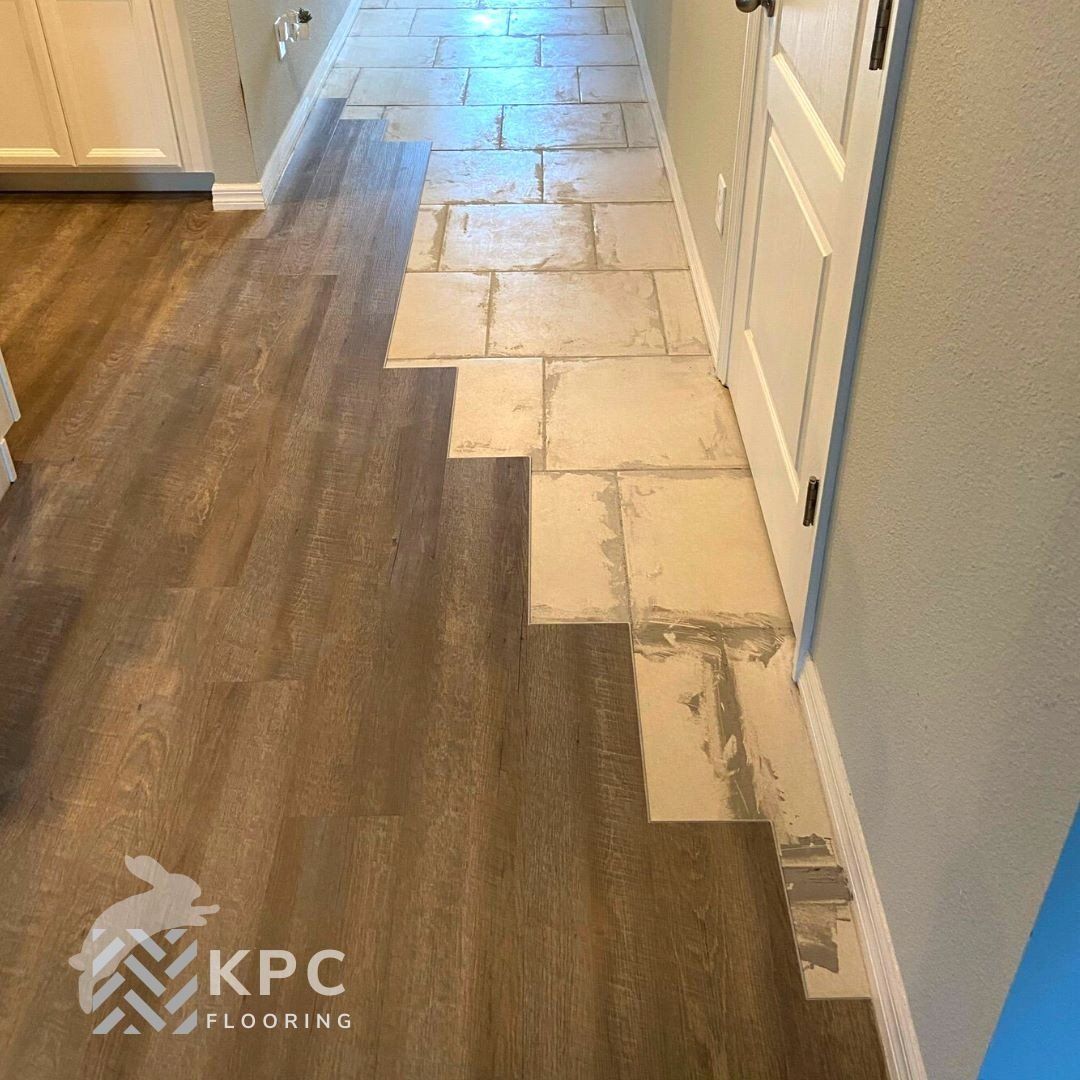
Sound ceramic doesn't always have to come out. Breaking out tile is the slowest, dustiest part of many jobs, and when the existing tile is firmly attached it can become the base for the new floor.
Planks are never laid straight onto tile, because grout lines would print through and stress the click joints. The glaze is scrubbed, a cement-based skin coat is troweled across the whole floor to pack the grout joints, and self-leveling compound goes wherever the tile is out of plane. Everything cures before the first plank goes down.
We tap the tiles and check the floor first. Covering usually works when:
Loose, hollow or widely cracked tile has to come out instead; see floor removal and subfloor preparation. Baseboards either stay with new quarter round or get reset to the new height; see baseboards and trim.
Vinyl plank comes in two main builds. Rigid-core planks, labeled SPC (stone-polymer core) or WPC (wood-polymer core), click together and float; they hide minor slab texture. Glue-down planks are thinner and flexible; they bond to the subfloor and stay put under rolling office chairs, but every ridge beneath them telegraphs through, so they demand a smoother base.
On the box, the numbers worth reading are the wear layer, measured in mils (thicker resists scuffing longer), total thickness, and whether a pad comes attached. Texture, bevels and plank length change the look more than the label does.
Vinyl expands as it warms and contracts as it cools. A sunroom, an enclosed lanai or the strip in front of a west-facing slider moves far more than a shaded bedroom, so those spots call for rigid-core products and a full expansion gap at every wall. Strong afternoon sun also fades colors over the years; blinds or UV film on big glass slow that down.
Manufacturers generally expect a climate-controlled space. If part of the area isn't air-conditioned, such as a Florida room without a vent, mention it so the plank chosen is rated for it.
Claws, dragged chairs and dropped toys are what a family floor actually faces. A thicker wear layer buys the most protection, and a matte, textured finish disguises light scuffs far better than a slick, glossy one. Mid-tone colors are forgiving too: very dark planks show dust and pet hair, while very light ones show every footprint.
Over the right pad, vinyl stays quiet under running feet and paws, and it's warmer to sit on than ceramic, which is why it's popular in playrooms and nurseries.
Big flooring retailers and home builders often send independent crews to do the actual installation. That's the work KPC Flooring has done; now you can call us yourself for your vinyl plank floor.
KPC Flooring has already served customers of Empire Today, Lowe's, 50 Floor and Lennar.
Two homes with identical square footage can get very different quotes. The gap almost always comes from what has to come out and how much leveling the slab needs.
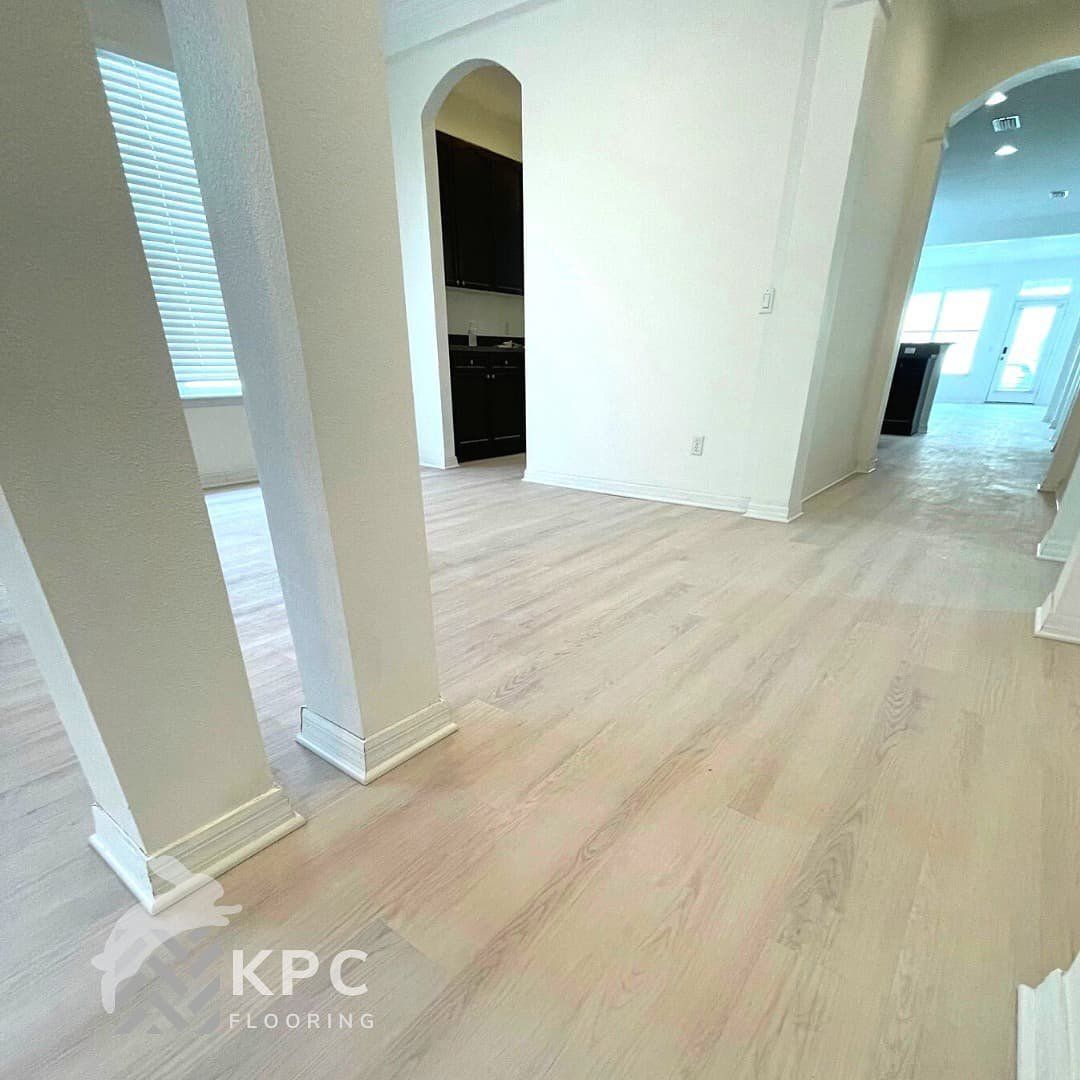
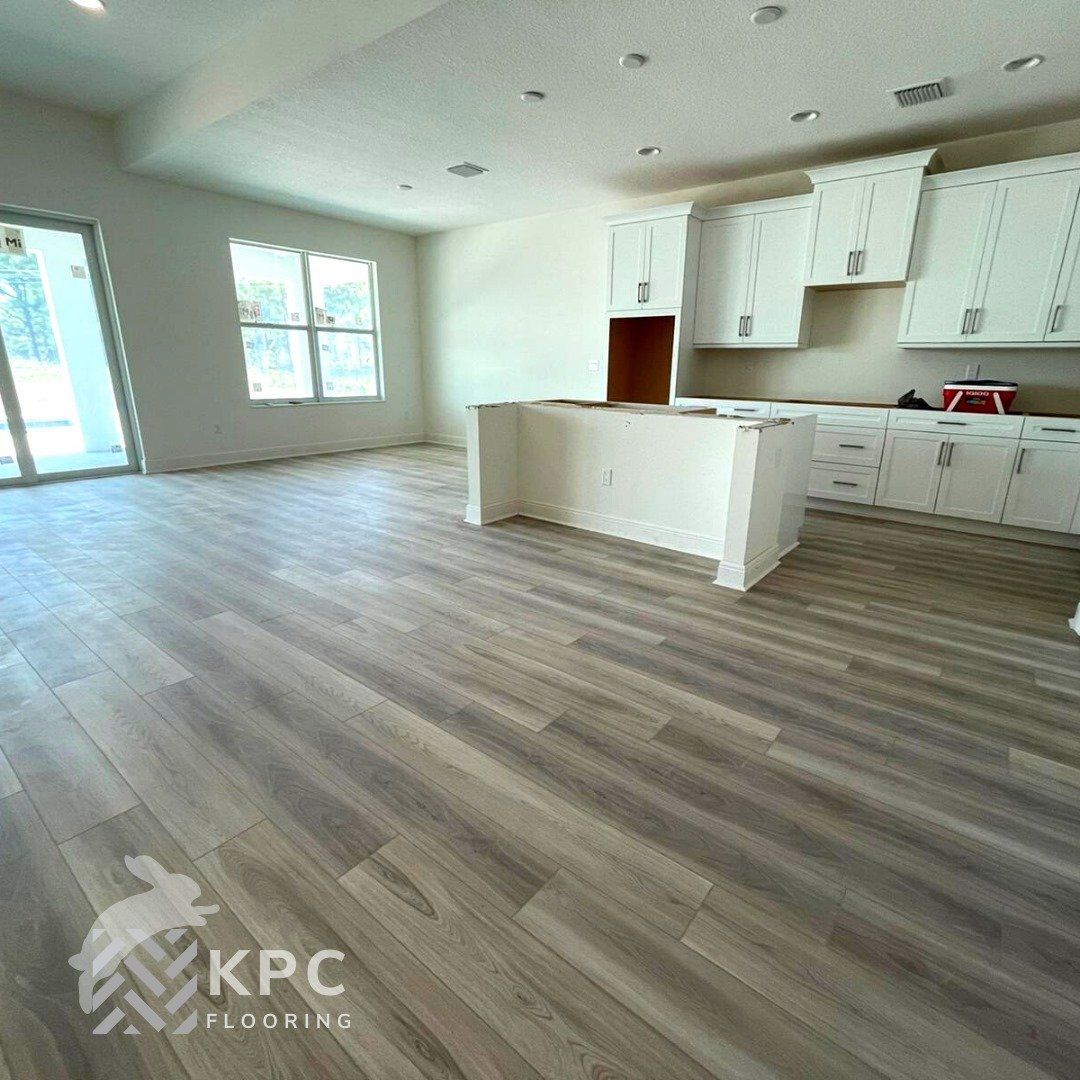
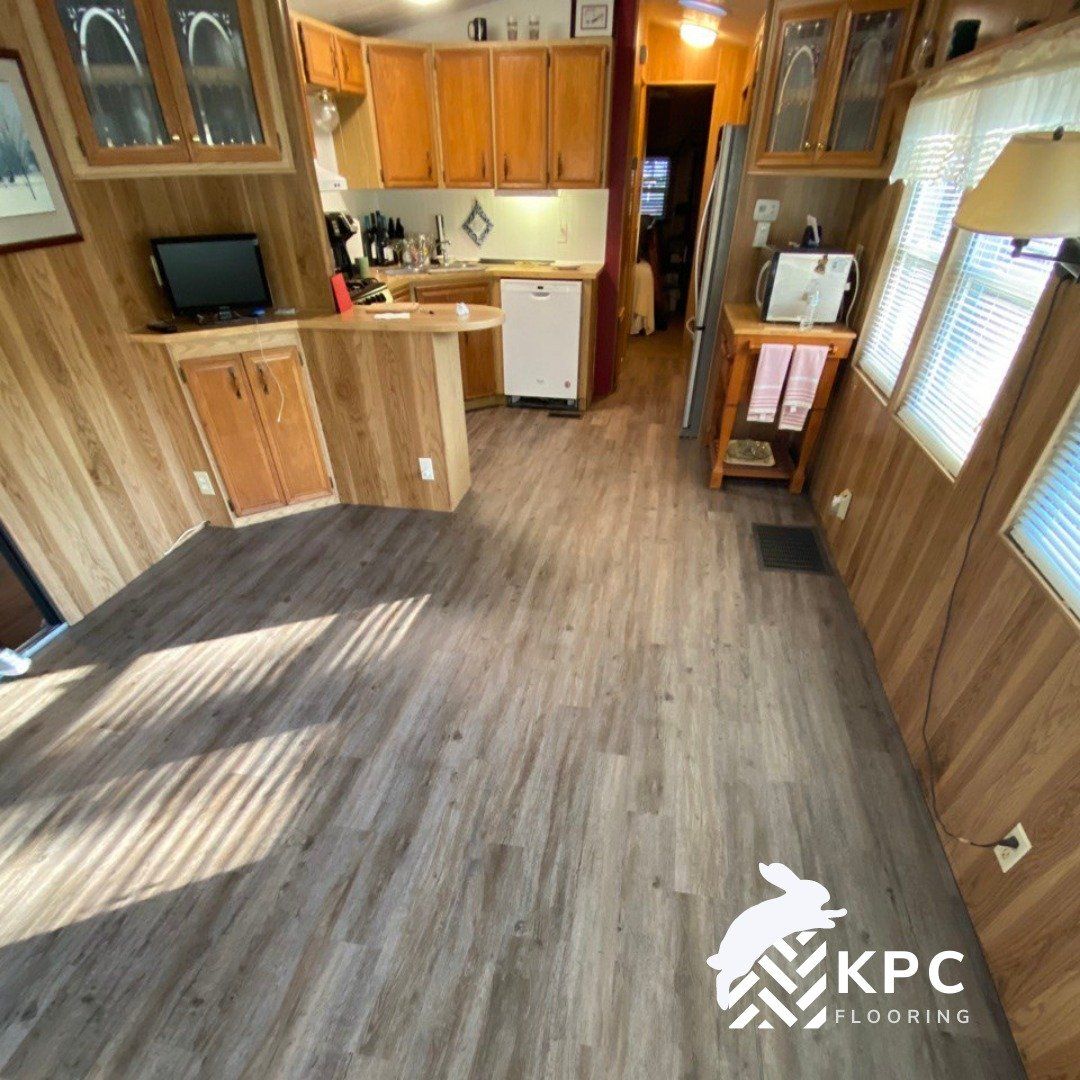
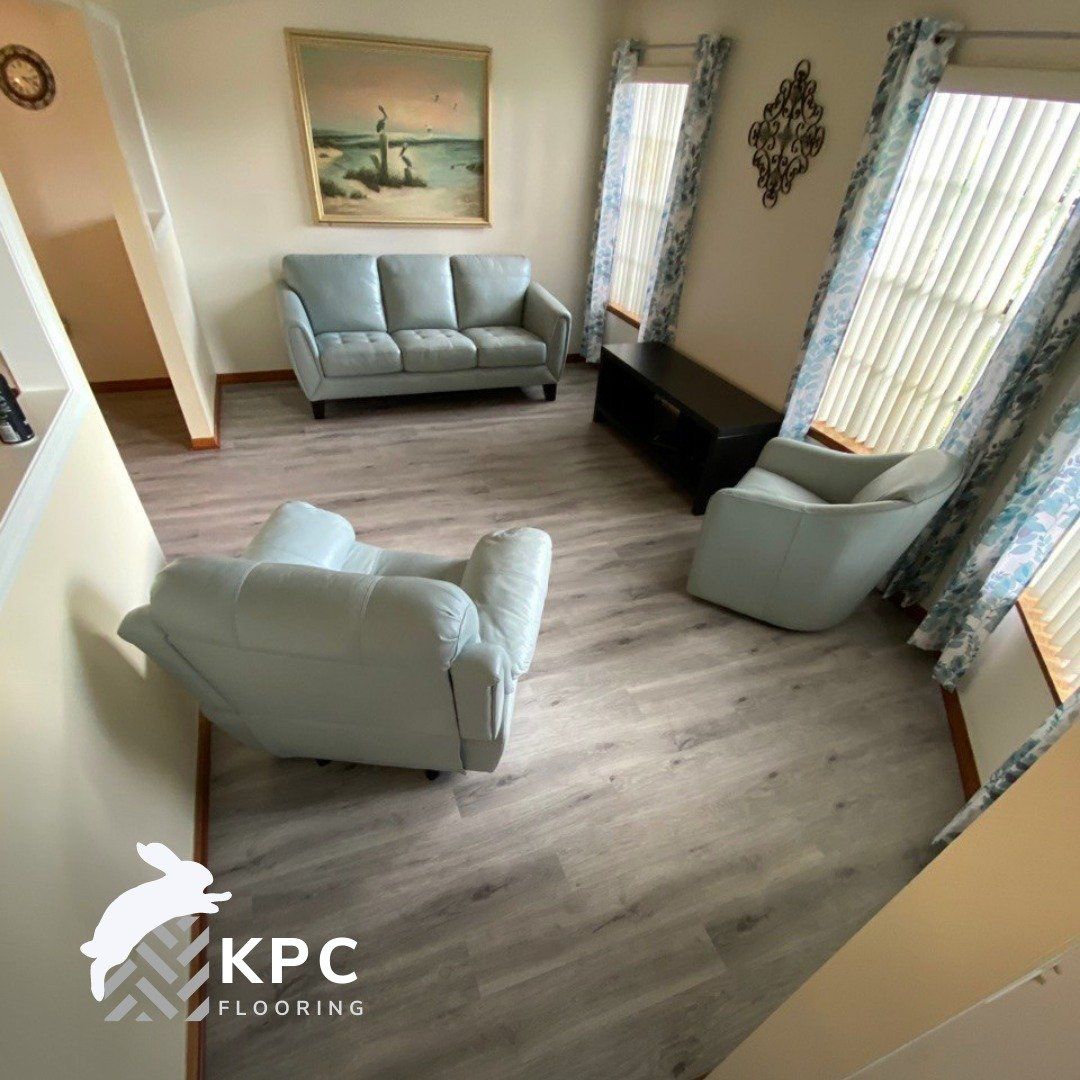
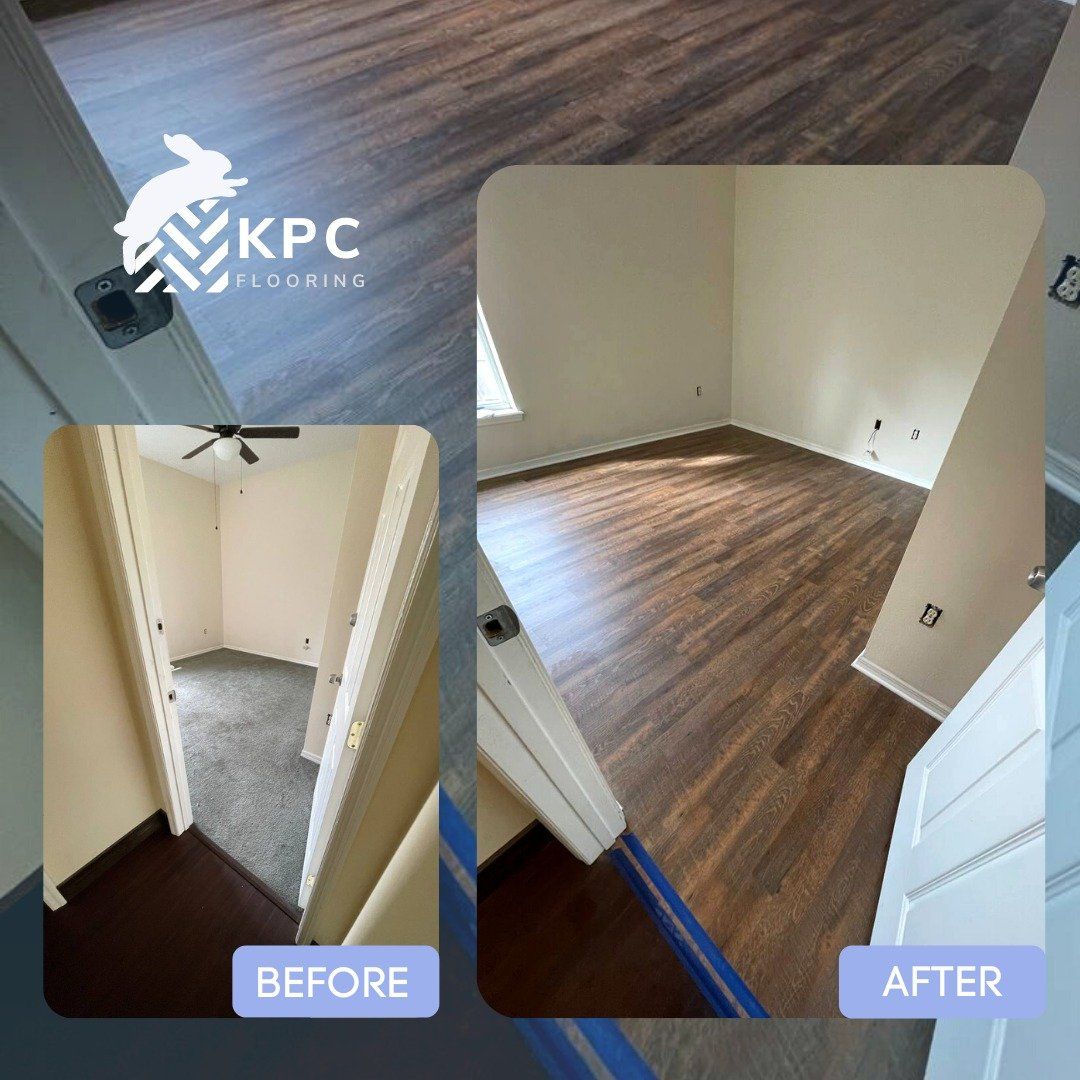
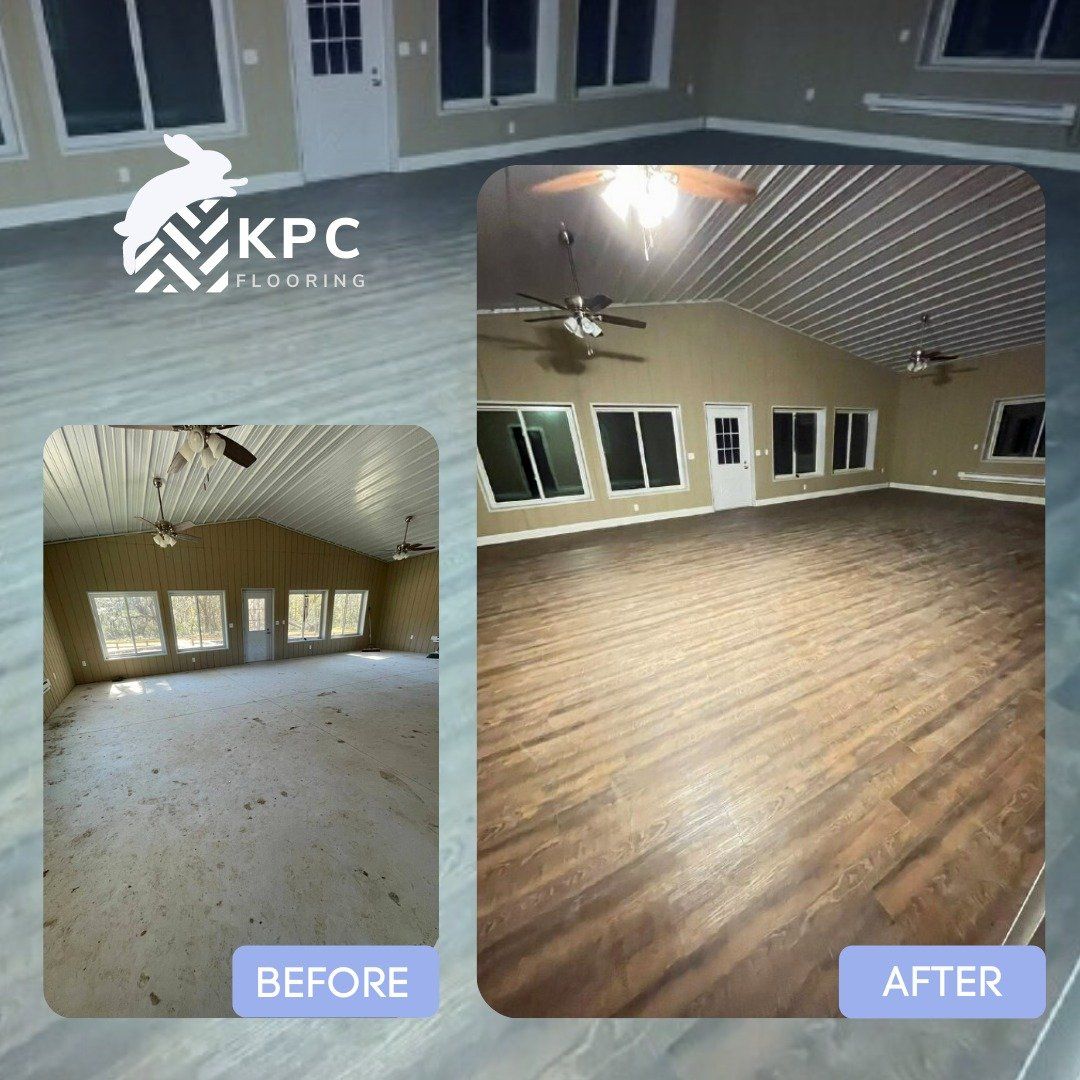
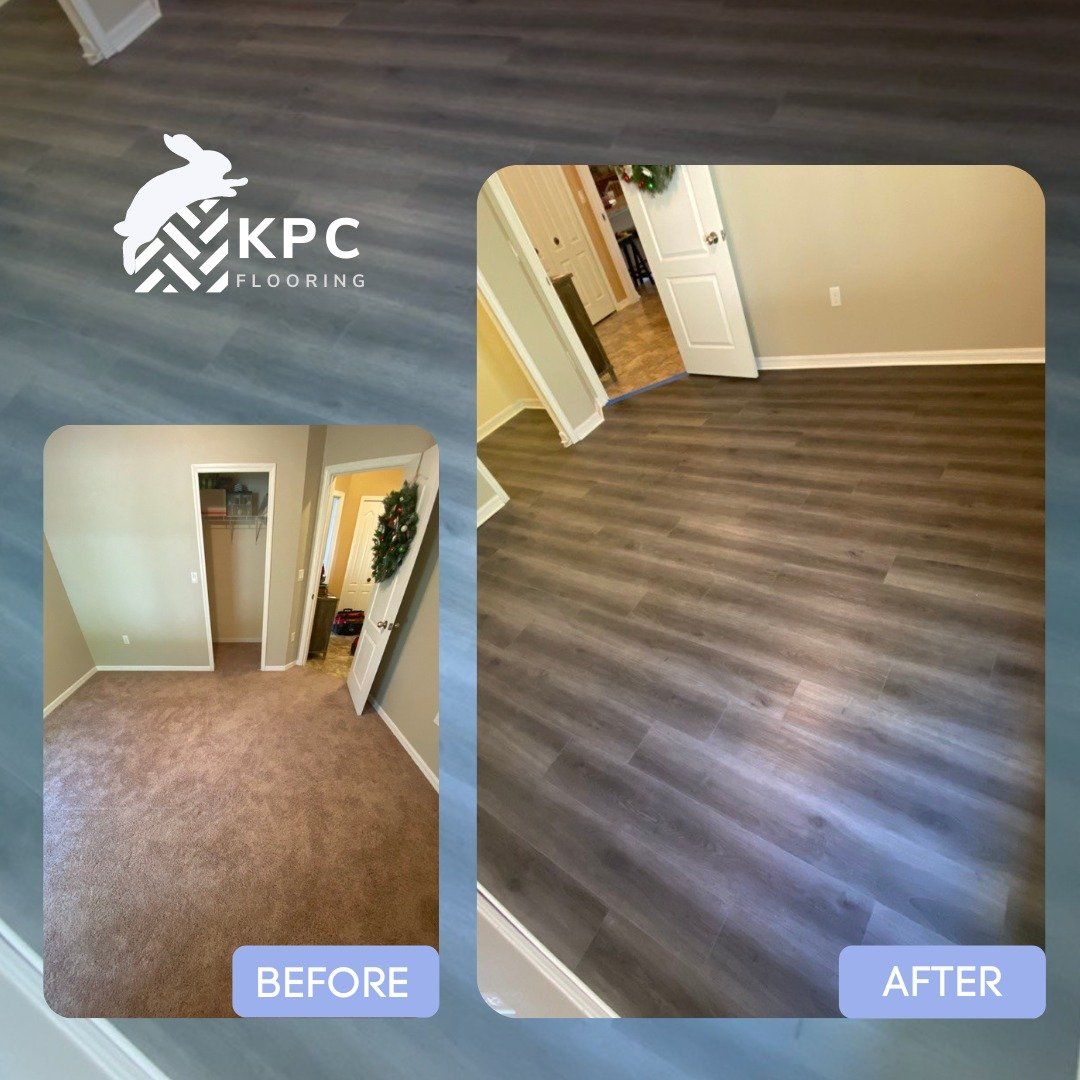
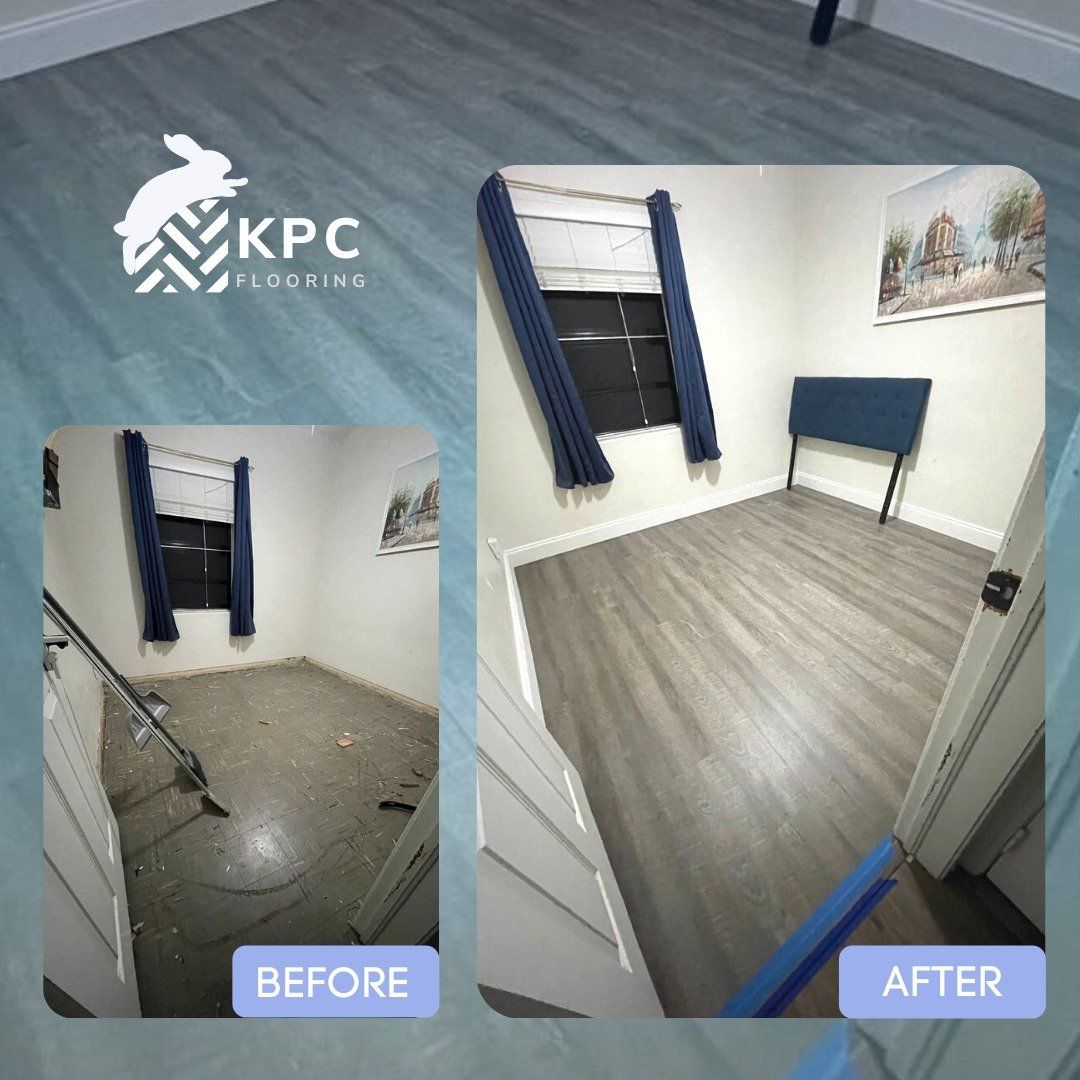
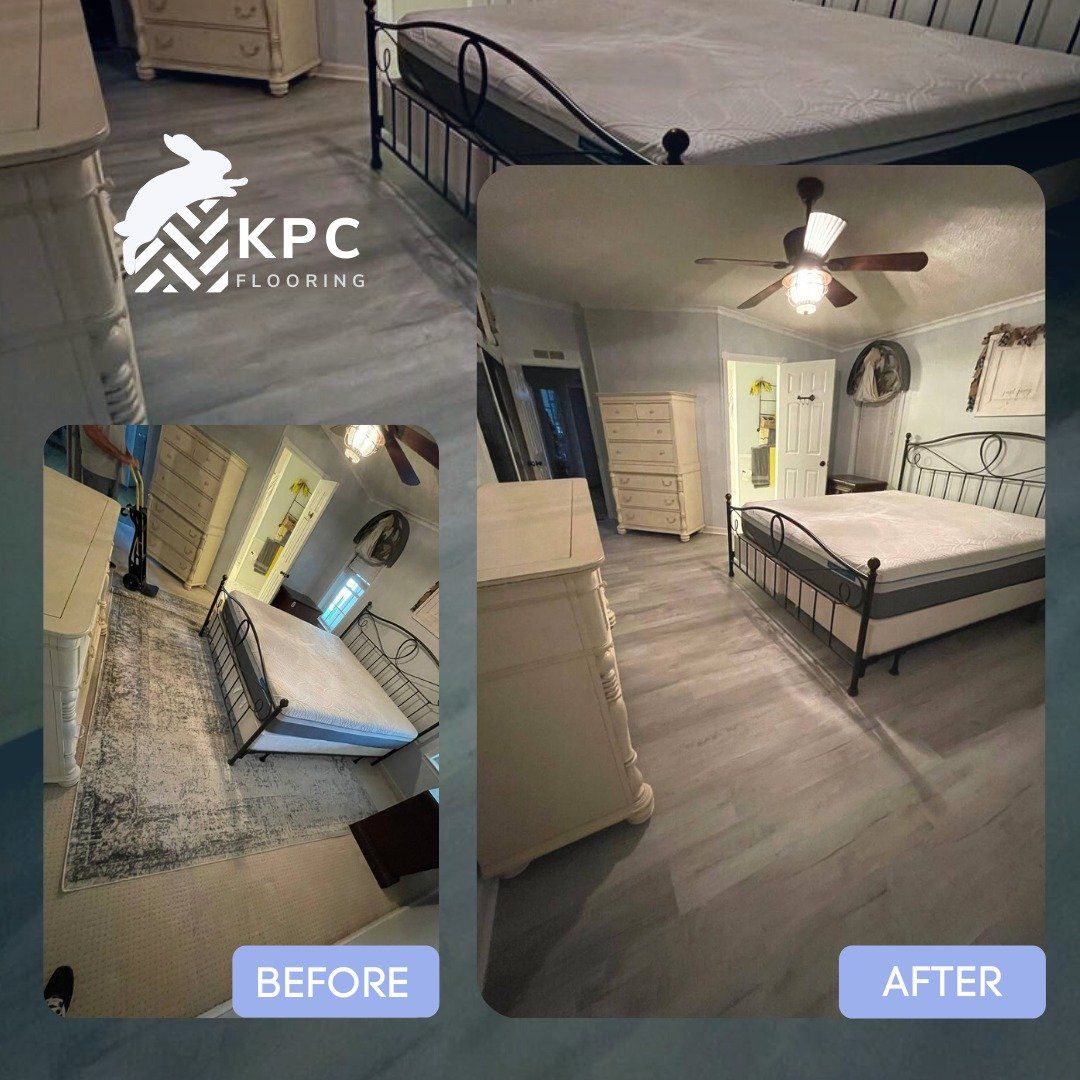
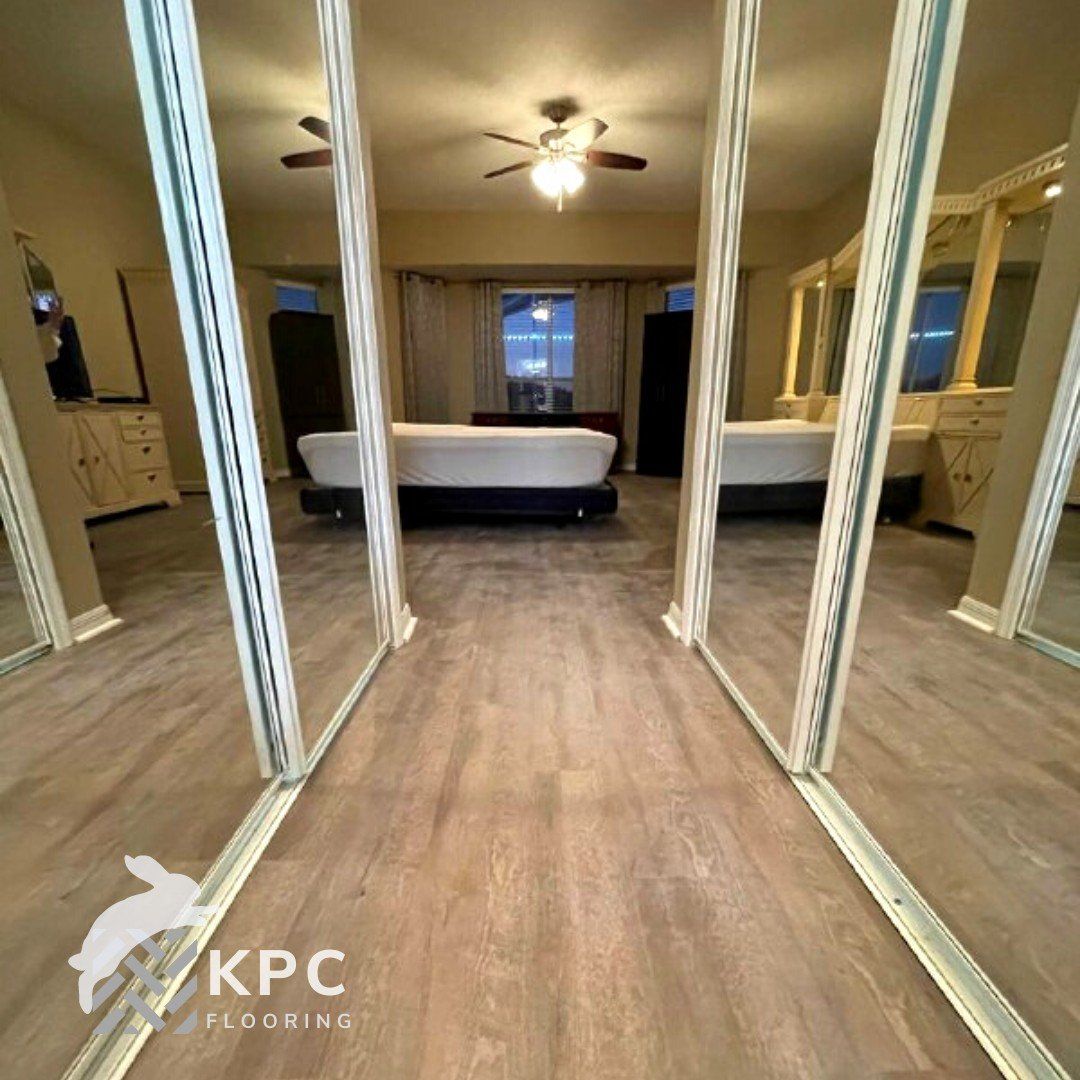
Finished vinyl plank work from KPC jobs.
More jobs, room by room, on our projects page.
Serving Apopka and Greater Orlando
3 photos · Completed
It depends on the area, the floor coming out, how much leveling the slab needs and the plank you choose. Breaking out ceramic and pouring leveler can add as much as the planks. We measure during a free in-home estimate and give you a quote that lists those items.
Often, yes, if the ceramic is firmly attached and close to flat. We skin coat the whole floor so the grout lines don't show through, level any low spots, let it cure and then lay the planks. Loose, hollow or widely cracked tile has to come out. The over-tile section above explains how we decide.
Yes, the material is part of the job. We bring samples to your home so you can compare colors against your walls and trim, in your own light.
Many rigid-core planks have a core that won't swell when wet, so a knocked-over glass or a pet accident wipes up. Water that runs under the floor at a wall or seam can still sit on the slab, though, so a plumbing leak still needs fast attention. If you're also weighing laminate, see our laminate page.
SPC is the denser of the two and shrugs off dings from dropped pans and heavy furniture, a good match for busy homes and sunny rooms. WPC has a little more cushion and a more muffled step. If you're undecided, we bring both kinds.
The wear layer is the clear top film that takes the scuffs. Thicker layers hold up longer in hallways, entries and homes with big dogs; a guest bedroom can get by with less. The figure is printed on every sample we show you.
Usually along the longest wall, or in the direction you look when you walk in, which makes a room feel longer. In a house with hallways and several rooms, one direction throughout tends to look most natural. We settle the direction with you before any plank is cut.
It depends on the area and what comes out first. A main level coming off ceramic usually needs at least three days, since the tile is broken out and the slab leveled before the first plank. We'll give you a schedule after the visit.
Floating vinyl has limits on how far it can run in one piece, set by each manufacturer. In very large open plans, or where planks pass through narrow doorways into hallways, a T-molding is sometimes required so the floor can move. We'll show you where, if anywhere, a break is needed before installing.
Have a question that is not answered here? Call and ask — se habla español.
Call (407) 427-8271Call (407) 427-8271, describe the rooms, and we'll book a time to measure and bring plank samples.